We hope you are being blessed! Here is the first chapter, a few days late, number 1 for 2026: our January newsletter.
Please let the editor know if you want to share something in the next edition.
 |
|
Vision for 2026: What Can We Believe God For? - Dave Food |
The first month of 2026 we step into the year expectantly, we do so with gratitude for what God has already done and with expectation for what He is yet to release. Vision, in biblical terms, is not wishful thinking. It is seeing what God is saying — and aligning our lives with it. “Where there is no vision, the people perish” (Proverbs 29:18). Vision sustains faith, sharpens focus, and anchors hope.
This year, we believe God is calling us to depth before breadth, obedience before expansion, and presence before performance. The invitation of 2026 is not to rush ahead, but to walk more closely with Him, listening carefully, responding faithfully, and trusting fully.
We can believe God for spiritual depth. In a distracted world, the Spirit is calling His people back to the quiet place. Prayer that is not hurried. Worship that is not formulaic. Scripture that shapes our thinking, not just our language. God is forming a people who know His voice and are confident in His leading. “Deep calls to deep” (Psalm 42:7) is not poetic sentiment; it is a prophetic necessity for this season.
We can believe God for transformation, not just activity. Fruitfulness in the Kingdom is never measured by busyness, but by changed lives. This year, we trust God for healing, emotional, relational, and spiritual. For restored hope where weariness has set in. For faith to rise again in places that have grown quiet. The promise remains: “He who began a good work in you will carry it on to completion” (Philippians 1:6).
We can believe God for greater influence with humility. Influence flows not from striving, but from serving. As God positions His people in workplaces, communities, and families, we believe for courage to live distinctively, with integrity, compassion, and grace. The world does not need louder Christians; it needs wiser ones. Lives that reflect Christ long before words explain Him.
We can believe God for missional momentum. 2026 is not about inward focus alone. As we are strengthened, we are sent. God is drawing people who are far from Him, often quietly, often unexpectedly. We believe for open hearts, divine conversations, and a Church that is confident in love rather than anxious about culture. “Lift up your eyes… the fields are ripe for harvest” (John 4:35).
We believe God for faith-filled obedience. Not grand gestures, but daily yeses. Obedience that trusts God’s timing, even when clarity feels partial. This is the year to walk steadily, faithfully, and together, confident that as we follow Him, He will do what only He can do. 2026 is not an unknown year. It is already held in God’s hands. And that is more than enough. |
 |
|
When We Fall: Learning to Build Again in Christ - Dave Food |
|
Failure is something most of us would rather avoid, hide, or quietly move past. Yet Scripture is remarkably honest about it. Abraham doubted, Moses lost his temper, David sinned publicly, Peter denied Jesus outright. The Bible does not airbrush failure; it redeems it.
For the Christian, failure is never the end of the story. It is often the place where God begins His deeper work.
The danger is not failure itself, but what we do next. Shame tells us to withdraw. Pride tells us to pretend nothing happened. Grace, however, invites us to return. “Though the righteous fall seven times, they rise again” (Proverbs 24:16). Rising is not denial; it is repentance, humility, and trust in God’s restoring hand.
Peter’s story is especially instructive. After his denial, he didn’t storm back into leadership. He went fishing, back to what was familiar. Yet the risen Jesus met him there, not with condemnation, but with a question: “Do you love me?” (John 21:15–17). Restoration began not with a lecture, but with relationship.
So, how do we build again after failure?
First, we come into the light. “If we confess our sins, He is faithful and just to forgive us” (1 John 1:9). Naming our failure before God — and often before trusted others — breaks the power of shame.
Second, we slow down. Failure often reveals cracks that busyness has hidden. God uses these moments to reshape our character, not just restart our activity. “Be still, and know that I am God” (Psalm 46:10) is not a rebuke; it is an invitation.
Third, we rebuild faithfully, not dramatically. Nehemiah rebuilt Jerusalem’s walls stone by stone, with a sword in one hand and a trowel in the other. Progress after failure is rarely instant, but it is always possible.
We remember this: our identity is not rooted in success, but in Christ. “There is now no condemnation for those who are in Christ Jesus” (Romans 8:1).
Failure does not disqualify us. In God’s hands, it can deepen us, and sometimes, make us far more useful than success ever could.
|
 |
|
Touching the World with a breakthrough from God - Dave Food |
Breakthrough is one of those words we often reserve for the dramatic, a sudden miracle, a long-awaited answer, a visible shift. Yet in God’s economy, breakthrough is rarely an isolated event. It is a way of living. It is what happens when heaven’s intention consistently meets earthly obedience.
Scripture reminds us, “The Lord has broken through my enemies before me like a breakthrough of water” (2 Samuel 5:20). Water does not force its way violently; it flows, it finds weakness, it reshapes the landscape over time. God-led breakthrough works the same way, steady, purposeful, unstoppable.
In a world marked by pressure, uncertainty, and deep spiritual need, God is not just looking for people who experience breakthroughs, but people who carry them. Every day becomes an opportunity for heaven to touch earth through ordinary obedience, a prayer offered, a step taken, a word spoken in faith.
Jesus modelled this rhythm perfectly. His life was marked by moments of great power, but also by daily surrender. He listened to the Father, responded in obedience, and allowed compassion to direct His actions. Breakthrough flowed not from striving, but from alignment. “The Son can do nothing by Himself; He can do only what He sees His Father doing” (John 5:19).
At Runnymede Christian Fellowship, we believe breakthrough begins internally before it becomes external. God shifts mindsets before He shifts circumstances. Faith grows quietly through prayer, obedience, and persistence long before doors visibly open. Persistent prayer keeps heaven’s agenda active on earth, shaping us even as God prepares the way.
Breakthrough is never just personal. When God moves in one life, the ripple effect reaches families, workplaces, and communities. Joseph’s breakthrough preserved a nation. Paul and Silas’ midnight worship released others from captivity. God’s breakthroughs are always larger than the moment that reveals them.
To live as a carrier of breakthrough means choosing faith over fear daily. It means worshipping before walls fall, obeying before outcomes are clear, and trusting God’s timing even when the wait feels long. We do not strive for victory, we live from the victory Christ has already won.
In a needy world, God is still breaking through. The question is not whether He is willing, but whether we are available. As we walk with Him each day, may our lives become conduits of hope, faith, and quiet power, touching the world one God-led breakthrough at a time. |
 |
|
Arise and Shine - Tenette Abanilla |
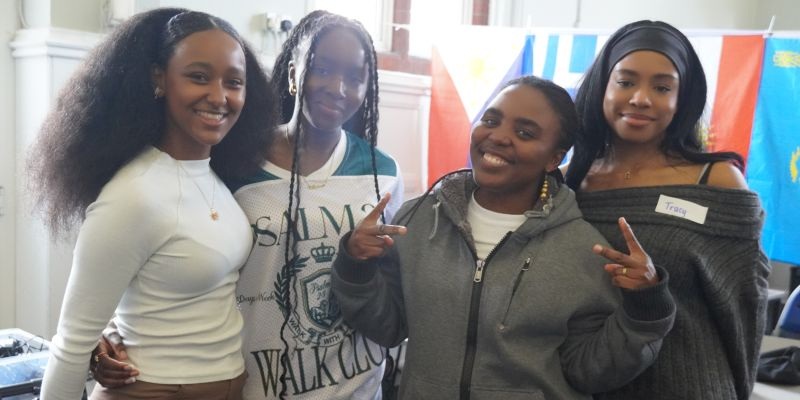
As we step into the new year, the women of RCF are poised to make it a year of firsts. Last year, our resounding message was about making a difference. This year, we are stepping even further—we are committed to making an impact.
Our first exciting initiative is the creation of a daily devotional, written entirely by the women of RCF, along with women from other churches who attend our monthly meetings. This is incredibly inspiring. While daily devotionals are not new to us—we are already living this practice—why not put it in writing and share it with others? What may seem like a simple reflection could be the very encouragement someone needs at the right moment.
We invite all the ladies to prayerfully share their reflections and contribute to this devotional. For details on the format and submission process, please see myself, Julia, or Lety.
Our second major plan is to host a Women’s Conference for Egham and the surrounding areas. We plan to invite Christian women who have made an impact in their respective fields—women whose lives and testimonies reflect God’s power and purpose. God willing, this could become an annual event.
Being a woman of God should inspire others to come to God. And while we may not have all the answers, we are committed to trying, faithfully, prayerfully, and boldly. |
 |
|
Equipping the Saints for the Work of the Ministry - Dave Food |
At Runnymede Christian Fellowship, we hold a simple but deeply biblical conviction: leadership is not reserved for a few, but released through the many. Church, at its healthiest, is not built around spectators but around equipped saints — ordinary people discovering that God uses willing lives to do extraordinary things.
Paul captures this beautifully in Ephesians 4:11–12, where leaders are given “to equip God’s people for works of service, so that the body of Christ may be built up.” Notice the emphasis. Leadership is not about doing all the ministry; it is about preparing others to do it. The measure of leadership is not how indispensable we become, but how equipped others are when we step back.
This shapes how we lead at RCF. Our aim is not to create dependency, but confidence. Not to gather followers, but to release servants. Jesus modelled this relentlessly. He taught, demonstrated, corrected, encouraged, and then He sent His disciples out. Leadership, in the Kingdom, always moves towards multiplication (Mark 6:7).
Equipping people means investing time, not just delivering content. It requires walking with people through process, allowing space for questions, mistakes, and growth. Peter was impulsive, Thomas doubted, John was ambitious — yet Jesus did not disqualify them. He shaped them. That same patience underpins our leadership culture.
We equip people spiritually through Scripture, prayer, and discernment, but also practically, helping people understand their gifts, their callings, and their responsibilities. Ministry is not confined to the platform. It happens in workplaces, families, neighbourhoods, and everyday conversations. “Whatever you do, work at it with all your heart, as working for the Lord” (Colossians 3:23).
At RCF, leadership is always servant-hearted. Jesus’ towel and basin still define greatness (John 13:14–15). We expect leaders to serve visibly, to listen carefully, and to lead with humility. Authority flows from character long before it flows from position.
Equipping also means trusting. Leaders must be willing to release responsibility, even when outcomes are uncertain. Paul reminded Timothy to entrust truth to “reliable people who will also be qualified to teach others” (2 Timothy 2:2). Healthy leadership always thinks in generations.
Our prayer is that Runnymede Christian Fellowship continues to be a place where people are formed, released, and trusted — equipped not just to serve the church, but to carry the Kingdom wherever God has placed them. Because the work of the ministry was never meant to sit with a few hands, but to flourish through many faithful lives. |
 |
|
Walking in the Prophetic in a Needy World Dave Food |
We live in a world that is loud, anxious, and deeply needy. Needs shout from every direction, emotional, economic, relational, spiritual. Yet the prophetic call of God has never been about noise. It has always been about clarity. To walk prophetically is not to escape the world’s pain, but to step into it carrying God’s heart, God’s perspective, and God’s hope.
The biblical prophets were not detached commentators. They were deeply embedded in the life of their people. Jeremiah wept. Isaiah confronted injustice. Amos spoke into economic oppression. Jesus Himself looked over Jerusalem and wept (Luke 19:41). The prophetic is never cold truth delivered at a distance; it is truth wrapped in compassion.
At Runnymede Christian Fellowship, we understand the prophetic not primarily as prediction, but as alignment. To walk prophetically is to see situations as God sees them, and to respond as He would. Paul reminds us that prophecy exists “for strengthening, encouraging and comfort” (1 Corinthians 14:3). In a weary world, those three things are desperately needed.
Prophetic people listen before they speak. They refuse to be shaped by fear, outrage, or cultural pressure. Instead, they take time to discern what the Spirit is saying beneath the surface noise. This requires stillness, humility, and a willingness to sit with discomfort. The prophetic does not rush to offer solutions; it seeks God’s wisdom first.
Walking prophetically also means acting justly. Micah 6:8 calls us to “act justly, love mercy, and walk humbly with our God.” Prophetic faith does not stop at words; it moves towards people. It feeds the hungry, stands with the marginalised, challenges systems that crush dignity, and offers hope where despair has taken root.
Jesus modelled this perfectly. He spoke prophetically, but He also touched lepers, restored the broken, and welcomed the overlooked. His authority flowed not from volume, but from intimacy with the Father. When we walk closely with God, our words carry weight because our lives carry credibility.
In a needy world, the prophetic Church must be both listening and loving, discerning and doing. We are not called to shout louder than the world, but to see deeper than it. As we walk prophetically together, may we become people who bring clarity where there is confusion, hope where there is weariness, and God’s presence into the places that need it most.
Because the truest prophetic voice is not one that points from a distance, but one that walks faithfully alongside. |
Some key links
Link to subscribe to the blog so it comes to you rather than you having to go and find it (now available in 10 languages). This is available to both visitors and members.
You can access all our past sermons here.
Conferences we have hosted or been part of here.
We would love contributions to the newsletter from all those involved at RCF.
If you have something you would like to share in the next newsletter, or want to help us to improve it please email theeditor@e-runnymede.co.uk |