The River of God 

Scripture opens and closes with the same picture. Genesis 2:10 tells us that "a river went out of Eden to water the garden, and from there it parted and became four riverheads," and Revelation 22:1 shows John "a pure river of water of life, clear as crystal, proceeding from the throne of God and of the Lamb." Between these two verses lies the whole revelation of the river of God, and it is worth tracing that revelation carefully rather than treating it as a poetic image. The river is not decoration. It is a consistent, developing doctrine of how the presence of God moves, and how that movement is meant to touch the life of the believer.
 
The river has a fixed source. In Eden it flows out of the garden where God walked with man. In Ezekiel it flows from under the threshold of the temple, from the place of sacrifice and the presence of God. In John it flows from the heart of the believer filled with the Spirit. In Revelation it flows from the throne of God and of the Lamb. In every case, the river originates in the immediate presence of God and never in human effort or human emotion. Psalm 46:4 confirms this: "There is a river whose streams shall make glad the city of God, the holy place of the tabernacle of the Most High." Gladness in the city is the result of the river, not its cause. This corrects much popular teaching, which treats revival and blessing as something worked up rather than something that flows down from a fixed source.
 
The river also demonstrates progression. Ezekiel 47 gives the clearest teaching on this. The angel measures the water four times as Ezekiel moves downstream from the temple. Ezekiel 47:3 to 5 records the water coming up "to my ankles," then "to my knees," then "to my waist," until finally it becomes "a river that I could not cross, for the water was too deep, water in which one must swim." This is one river experienced at increasing depth, and the depth is determined by how far the individual moves from the source, not by how the river changes. The water does not rise to meet a stationary man. Ezekiel is repeatedly told to go further in, and only at the fourth measurement does he lose the ability to stand on his own feet. Waist-deep water still allows a man to control his own direction. Swimming in water does not. There is a depth of the Spirit at which self-direction ends and the current determines the course, yet many believers remain at knee depth, receiving enough of the Spirit to feel supported while still governing their own steps.
 
The river produces a specific effect. Ezekiel 47:9 states that wherever it flows, healing follows, "so everything will live wherever the river goes." Verse 12 adds that trees grow on the banks whose "leaf will not wither, and its fruit will not fail," because "their water flows from the sanctuary." Fruit that does not fail is not the product of the tree's own strength but of its proximity to the river. This corrects the common error of locating fruitfulness in personal discipline or gifting rather than in continual contact with the flow of God's presence. The tree is not commended for effort. It is described simply by its position.
 
The river is then internalised in the New Testament believer. John 7:38 to 39 records Jesus saying, "He who believes in Me, as the Scripture has said, out of his heart will flow rivers of living water." John clarifies that "this He spoke concerning the Spirit, whom those believing in Him would receive." What Ezekiel saw issuing from a physical temple, Jesus locates within the believer once the Spirit is given. This is a change of location, not a change of substance. The river Ezekiel measured, and the river Jesus promised are the same river, now flowing from a temple made of people rather than stone. Access to the river is no longer geographical. It is a matter of abiding in Christ and being filled with the Spirit, as Ephesians 5:18 commands.
 
The river reaches its destination. Revelation 22:1 to 2 returns to the river proceeding from the throne, with the tree of life on either side bearing twelve kinds of fruit, its leaves given "for the healing of the nations." The doctrine that begins in Eden with a river watering a garden ends with a river healing the nations. This shows the trajectory of the whole revelation. What starts as personal provision in Eden becomes, through the temple, through Christ, and through the Spirit-filled believer, a means of healing that reaches far beyond the individual.
 
The teaching, taken as a whole, is this. The river originates only in the presence of God. It is experienced at a depth determined by how far one moves beyond self-reliance. It produces fruit and healing as a function of proximity, not effort. And it is now located within the believer by the Holy Spirit, given so that what began in Eden might reach the nations. The right response is not admiration but movement, since Ezekiel's revelation came only as he kept walking further into water he had not yet tested.
 

13/09/2026
Salma
Hi, I’m Salma.
How can I help you?
I’d like to attend on Sunday.
I’d prefer to join online.

Ask any other questions?

Connect with RCF
I want to be part
I want to connect
I want to give
Clear
"For I know the plans I have for you, declares the Lord, plans for welfare and not for evil, to give you a future and a hope."
Jeremiah 29:11
 
Send

Are you sure you want to clear this chat?

Cancel
Clear

Planning your Visit

Why not plan a visit to try us out?
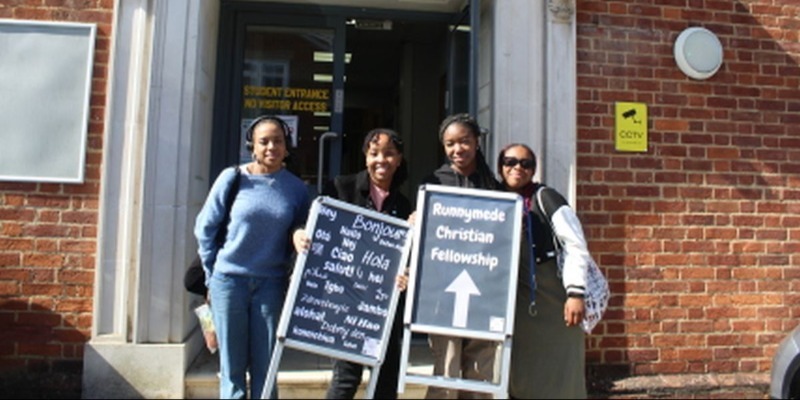

studentwelcomer 

Whether this is your first time visiting a church or you’ve attended another church for years, we understand that visiting a new church can be a bit overwhelming. To help make it a bit easier, we’ve done our best to answer some questions you may have, so your first experience is a little less overwhelming.

Runnymede Christian Fellowship is a church based in Egham but serving a much larger geographical area. Those who call us home come from EghamVirginia Water, Staines, Englefield Green, Egham Hythe, Pooley Green, Maidenhead, Ascot, Camberley, Sunbury, Heathrow, Slough, Ashford, Thorpe, Windsor, Woking and beyond.

Our church is a community of believers who gather regularly to share life and demonstrate God's love. We do this by encouraging and serving each other and the community. We believe in the power of prayer and are always happy to pray for you.
 

Church - What to expect

Our Sunday service is available to stream online at 11 am. You can join us on Livestream or via Facebook, LinkedIn, YouTube or X.

The Sunday Venue is Coopers Hall, Strodes College, Strodes College Lane in Egham, open to all, so if you would like to join us, please feel free to do so. If you have any questions, please call us on 01784 637010.

We run a physical Sunday School most weeks. If you would like your children to receive a weekly Sunday School teaching pack that you can do from home, please email us at admin@e-runnymede.co.uk so that we can send you the materials.
 

Sunday Venue at Coopers Hall, Strodes College, Strodes College Lane, Egham
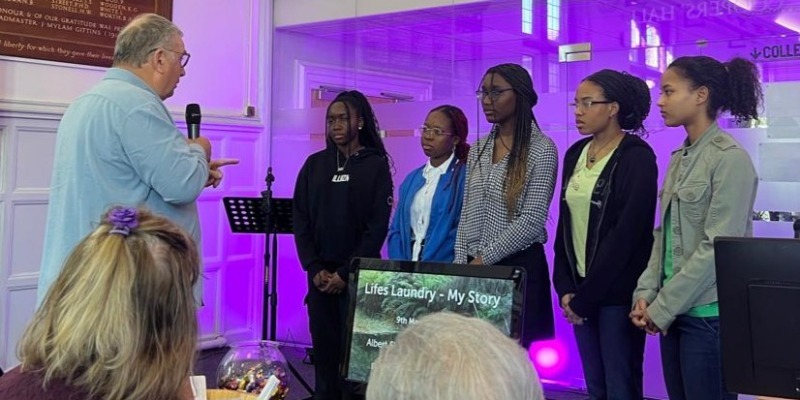

 Prophetic word for students -

Our Sunday service starts at 11.00 and typically lasts about 90 minutes.

We begin each service with lively worship, featuring songs from around the world, followed by inspiring, Bible-based teaching. All our sermons are recorded and are available as a podcast after the service.

We have a monthly cycle of Sunday services, with our Communion Service on the first Sunday of each month and an All-Age All-Nation Service on the second. Our other Sunday services include Spirit-focused and teaching services.

We have consciously adopted being a blended church, that is, both online and face-to-face. You are welcome to join us on Livestream or via Facebook, LinkedIn, YouTube, or X, or catch up with the recordings later.
 

Joining us in person

Visiting a new and unfamiliar church for the first time can be intimidating, but we want to ensure you feel welcome and enjoy your time with us. A friendly face will be waiting to meet you at the entrance and welcome you. 

Doors open at 10:30 for coffee and prayer.
Our Sunday Service starts at 11:00 and typically runs for about 90 minutes, normally followed by tea and coffee.
 

Driving and Car Parking

Our Sunday Venue is Coopers Hall, Strodes College, Strodes College Lane, Egham, TW20 9DR, which has ample parking. 
Click on the link for directions to RCF.

We have plenty of parking spaces right outside the building. Spaces are reserved near the entrance for anyone with mobility issues (those with a blue badge). Please let us know if you need to use one of these spaces, have any special needs, or require any assistance.

The car parking area is a public area, so please ensure that your children are under your control and that, for their safety, they do not run around in the car park.
 

Visiting with children?

Everyone is welcome at RCF. We encourage everyone, regardless of age, to join the service. We offer Sunday School, which begins after worship and runs concurrently with the sermon for 30 to 40 minutes, serving children aged 4 to 12. On the second Sunday of each month, we have a shorter All-Aged All Nations Service, where the children stay for the worship and the sermon.
 

After Church

We chat over coffee and biscuits after church on the first, third, fourth and fifth Sundays. If you want to get to know us better, why not join us for Sunday lunch with some of our members? The first meal is on us (Voucher provided).  Please contact us and let us know. We would love to share a meal and get to know you better!
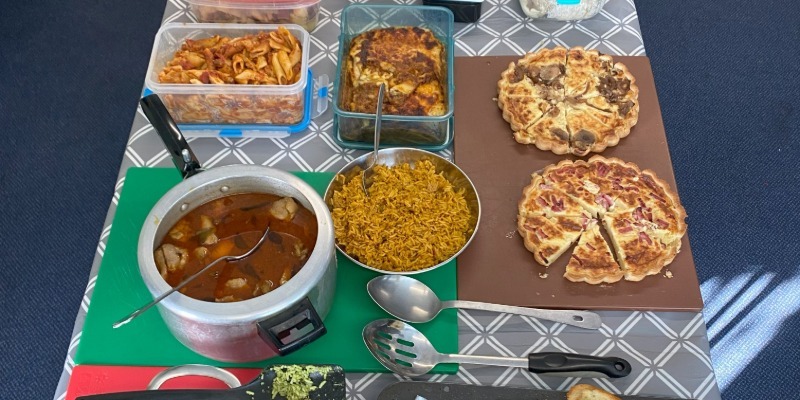
Fellowship Feast  
 

Want to connect?

If you're interested in connecting with us, whether to join our online community or attend our Sunday gatherings, please use our connect card.
 

Any Questions?

If you have any questions, please review our FAQ page. Here, you’ll find answers to many common questions. If you still have questions or concerns, please contact us; we’d love to hear from you.
 

We look forward to welcoming you to RCF

 
To contact us or see a map, click here.

Our admin address and Midsweek venue is Virginia Lodge, Heritage Court, Egham
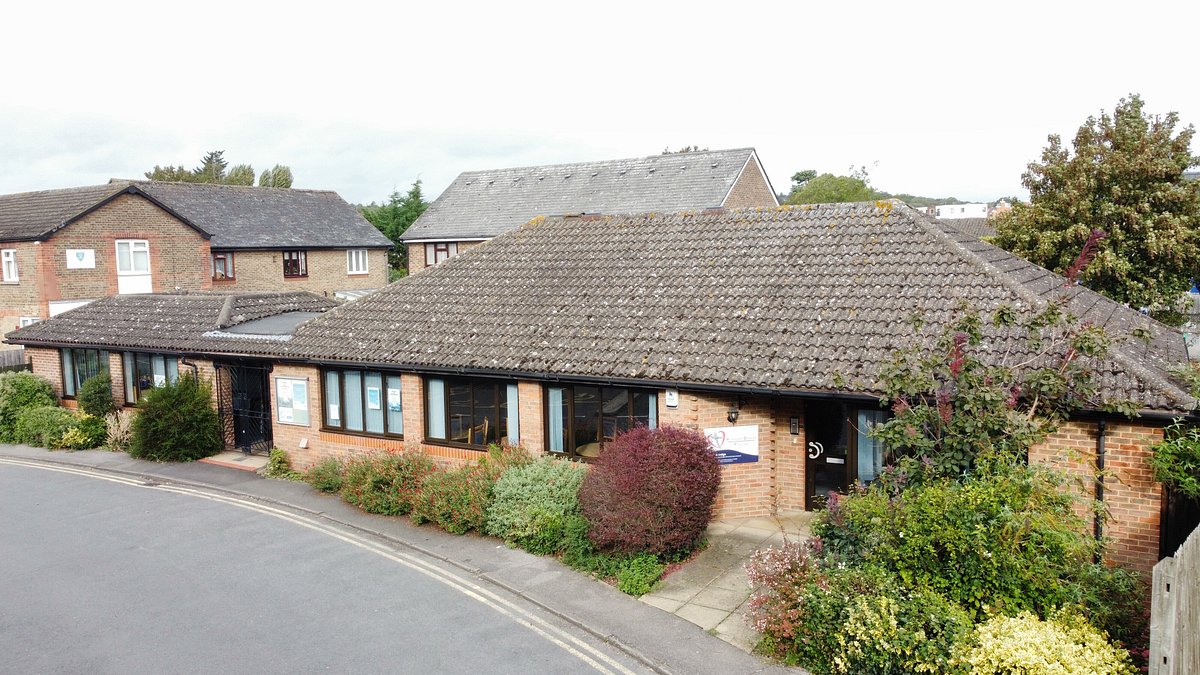
Virginia Lodge Ariel
 
Text Size:  
Small (Default)
Medium
Large
Contrast:  
Normal
High Contrast